




ozone
Ozone Gas Concentration Unit Conversion Table Explained

Discover everything about ozone technology: unit conversions, generators, nanobubble mixers, and sensors for water treatment and disinfection. Acniti’s ozone page explains practical applications for aquaculture, food, pharma, and environmental safety. Explore innovative solutions for accurate ozone measurement and eco-friendly purification to optimize your processes and improve water quality. Read on for in-depth industry insights and product details.
Ozone concentration is measurable in several different units depending on the application, industry, or measurement environment. Here is an explanation of the conversion table found on the Acniti website, which shows conversions between commonly used ozone concentration units:
| G/nM3 | PPM | VOL% | WT% |
| 1 | 466.666667 | 0.04666667 | 0.06998367 |
| 10 | 4,666.66667 | 0.46666667 | 0.69837047 |
| 100 | 46,666.6667 | 4.6666667 | 6.84039088 |
| 0.00214286 | 1 | 0.0001 | 0.00015 |
| 0.02142857 | 10 | 0.001 | 0.00149999 |
| 0.21428571 | 100 | 0.01 | 0.01499925 |
| 21.4285714 | 10,000 | 1 | 1.49253731 |
| 214.285714 | 100,000 | 10 | 14.2857143 |
| 428.571429 | 200,000 | 20 | 27.2727273 |
| 14.3334926 | 6,688.96321 | 0.66889632 | 1 |
| 147.783251 | 68,965.5172 | 6.89655172 | 10 |
| 306.122449 | 142,857.143 | 14.2857143 | 20 |
| 2142.85714 | 1,000,000 | 100 | 100 |
Units Explained
G/nm³ (grams per normal cubic meter):
PPM (parts per million):
VOL% (volume percent):
WT% (weight percent):
How to Use the Table
Practical Example
If an ozone generator produces 10 G/nm³, the table shows this is equivalent to:
Remarks
Links
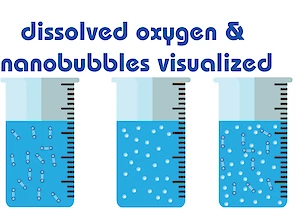
Ozone nanobubbles are attractive for water purification, treatment, and disinfection. ozone nanobubbles have a higher mass transfer rate than ordinary bubbles and there for nanobubbles more efficiently use ozone as a powerful oxidizing agent and sterilizer to kill or inactivate bacteria and viruses.
Discover the revolutionary Acniti Oxiti ozone generator that combines O3 and O2 production in one compact unit. This air-cooled system generates 12 grams of ozone per hour using a built-in oxygen concentrator for optimal output. Built with premium materials including quartz glass and titanium, it offers 16,000 hours of service life—far exceeding ceramic alternatives. Perfect for research applications requiring contamination-free ozone and water treatment systems. Learn how this innovative technology can transform your ozone generation needs.
Reliable ozone measurement, easy to use! The Ozone Leak Detector PHNX‑100 is a high-quality ozone gas detector that is specially designed for real-time measurement of ozone concentrations in the air. Whether you work with ozone generators for disinfection, in a laboratory environment, or are responsible for air quality in technical installations, this detector offers the certainty you need. Ozone is powerful, but potentially harmful if exposed to too much. The PHNX‑100 ensures that you always have insight into the current situation. The detector is equipped with an accurate electrochemical sensor. If set values are exceeded, an alarm is automatically activated, possibly linked to external systems via a relay output. Installation is simple and operation is intuitive. The sensor is replaceable without recalibration, which saves time and costs in maintenance. The compact housing makes the detector suitable for a wide range of spaces, from technical installations to industrial workplaces. In short: the Ozone Leakage Detector PHNX‑100 combines reliability, safety and ease of use and safety in one smart solution. Ideal for those who work with ozone and want to leave nothing to chance.
The acniti ozone decomposer uses a catalytic method to remove excess ozone. The ozone destructor uses a modular optional approach with a Water trap, Heated chamber, Catalyst Sieve ozone destructor and Vacuum pomp. The modular approach makes ozone destruction possible many environmental conditions.
The ozone nanobubble mixer is a nanobubble generator which is specifically designed for the use with ozone. Research with universities has shown, that ozonated nanobubble water, keeps longer its ozone residue in the water than when it is used only with a venturi also the amount of ozone gassing out is reduced.
Nanobubble Ozonation is a highly effective water treatment process that utilizes ozone's powerful oxidizing properties to disinfect water, eliminate viruses, bacteria, and other pathogens. It also removes contaminants like iron and manganese, improving taste and odor. This method generates no harmful residuals, making it an eco-friendly choice for safe drinking water preparation.
Discover the latest ozone water sensors from Acniti, designed for precise measurement of ozone levels in water ranging from 0 to 50mg/L. Equipped with advanced UV and polymeric membrane technology, these sensors are well-suited for research laboratories and industrial applications. The versatile options offer temperature compensation, analogue outputs, and portable models, helping you achieve reliable water quality analysis every time.
Measure and control precisely ozone levels in gas measures from 0-60g/m3. Measurement principle based on UV absorption or Polarographic with Polymeric.
Gas check valve ozone to avoid water in the ozone generator made from stainless steel 316L with viton seals
Dissolved components measurement systems are instruments employed to determine the minor components concentration present in water when it's dissolved. The developed CX-100-II revolutionizes water quality analysis by utilizing the Vapor–liquid separator method for accurate measurement dissolved gases including ozone in water. Unlike conventional methods, it swiftly eliminates dissolved ozone and interferences, providing reliable on-site measurements. Its versatility in detecting minute sample quantities and ability to measure heavily polluted water beyond set concentrations make it a valuable tool. This innovation is particularly beneficial for applications like disinfecting water and maintaining water quality standards. With its user-friendly operation and robust performance, the CX-100-II stands as a significant advancement in water component analysis for various fields.
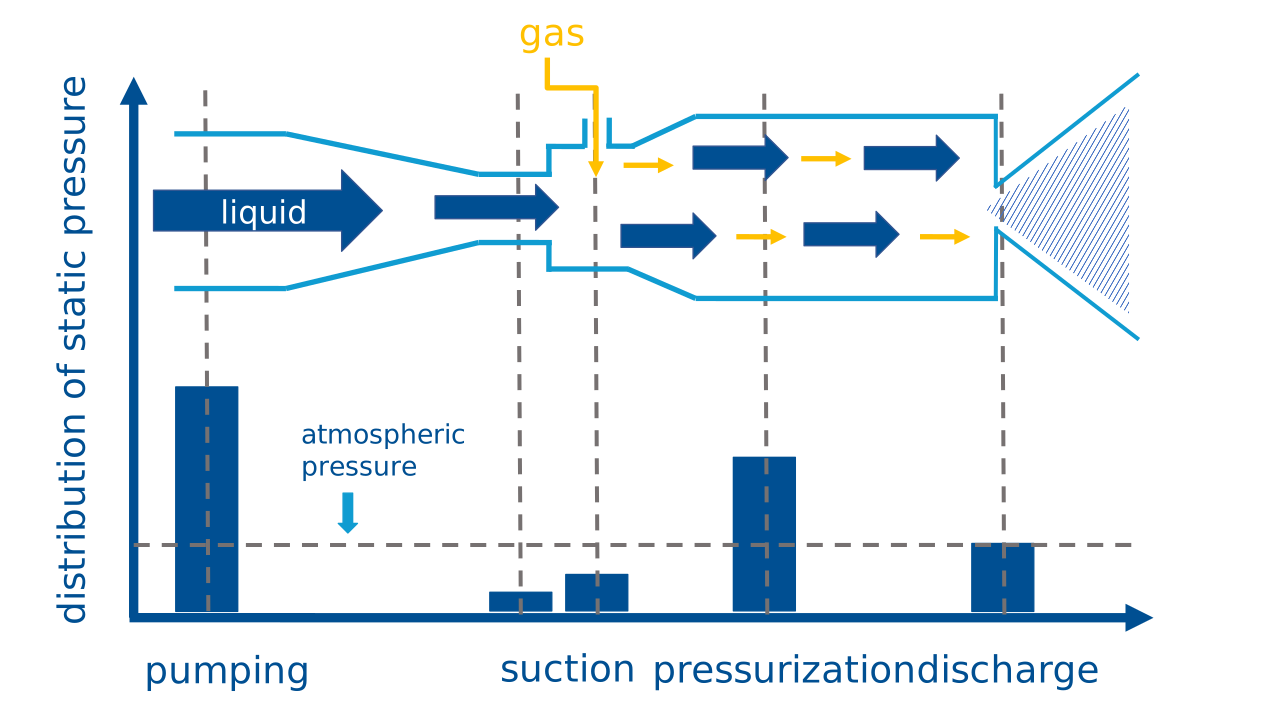
Combined with the benefits of a static mixer Acniti has implemented their proprietary swirl flow technology to generate efficiently and effectively ozone nanobubbles. The turbiti OEM series gives dealers and partners the opportunity to implement the turbiti ozone technology into their own equipment and sell nanobubbles generator equipment under their own brand name. This product is only for dealers and partner of acniti, that have a license agreement and commit to buy certain quantities.
Ozone vacuum break a product to protect ozone generators and ozone destructors.
Oxygen plays an important role in plant respiration, which causes energy production and plant growth. Increasing the percentage of oxygen in water improves the root structure and the activity of useful microbes in the rhizosphere. Naturally, an effective and practical system can increase productivity by improving the quality of irrigation water and increasing dissolved oxygen in irrigation water. Acniti oxygen concentrator and Acniti turbiti O3 are very effective supplements for irrigation of agricultural fields and at the same time improve water quality and increase dissolved oxygen (DO) and ozone in irrigation water. To determine the role of oxygen and ozone nanobubbles in the growth of lettuce, an experimental research was conducted. Research showed that by using Acniti nanobubbles generators, will increase the level of dissolved oxygen in water, and makes the roots of lettuce grow more and its weight increases significantly.
Washing of surfaces and laundry is one of the promising areas were nanobubbles can make a difference in the application. Reducing the amount of detergent, has a positive effect by reducing pollution, washing laundry without detergent, would greatly benefit the environment. Nanobubbles can lower the surface tension of water, the large amounts of oxygen molecules in bubbles charge the water negative.
High-efficiency industrial ozone nanobubble generator using hammer-rotation technology. Achieve maximum ozone dissolution with zero turbulence and low energy. Ideal for food safety, water treatment, and research.
specification sheet: Oxiti Industrial ozone concentrator for aeration, water treatment in ponds lakes, fish cultivation and aquaculture for the American market
Learn how the Complutense University of Madrid uses Acniti nanobubble technology to increase wastewater treatment efficiency and remove emerging contaminants. The research highlights that this technology enhances plants without requiring major infrastructure investments—a significant pain point for municipality and industrial plant managers.
Customized GaLF solutions built into your own applications, this is a stainless steel model. Suitable for hydrogen and gasoline.
Ebara pump option for the turbiti nanobubble ozone mixer 3LM4 40-160/0.55
Suction pump O3 decomposer 10-25LPM for ozone destruction systems. Vacuum pump with 110/220V power, 6mm quick fitting, 380x272x236mm. By Acniti LLC.